
A Whale-Mounted Camera Caught Sea Lions Chasing Fish Across Its Back
Whale-mounted cameras reveal sea lions pursuing escaped anchovies across a humpback’s back, and new research suggests the crowded hunt may help whales feed faster.
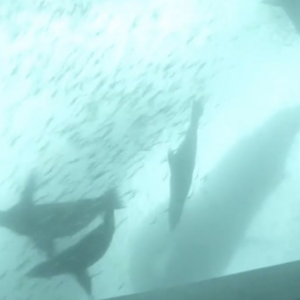
Whale-mounted cameras reveal sea lions pursuing escaped anchovies across a humpback’s back, and new research suggests the crowded hunt may help whales feed faster.
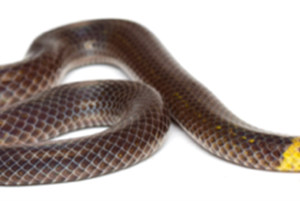
Slow-motion footage reveals how dwarf reedsnakes roll rapidly without tumbling head over tail. A new study explains their unusual escape.
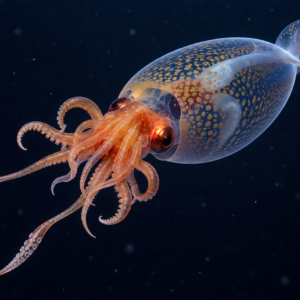
Filmed in March 2025, this nearly foot-long juvenile colossal squid drifts through the deep sea with a transparent body and orange-red head. Watch the official footage.
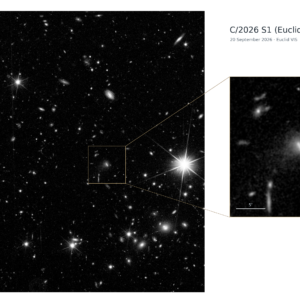
Euclid was mapping distant galaxies when a moving streak revealed its first previously unknown comet. ESA’s real telescope image shows the giveaway.
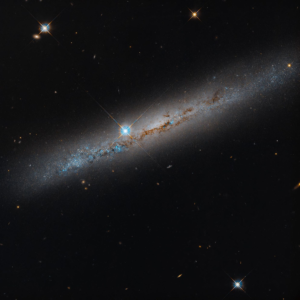
Hubble’s new edge-on portrait of NGC 1827 reveals dust lanes, young stars and a survey testing cosmology’s small-galaxy predictions.
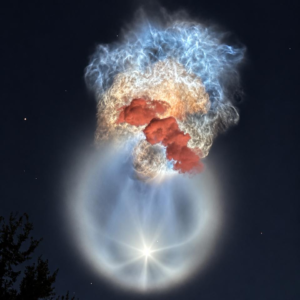
A Falcon 9’s sunlit exhaust made a giant predawn “jellyfish” while Dragon carried more than 6,300 pounds of science and hardware to the ISS.
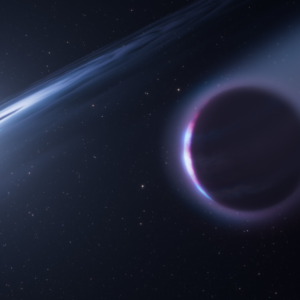
A 25-year-old Hubble puzzle may point to a gas giant forming from the debris of a star’s death. The planet is still a candidate, but the clue is remarkable.
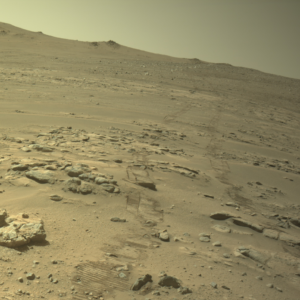
Perseverance passed Opportunity’s lifetime distance on Mars. Its self-driving system and repurposed helicopter hardware help explain how it keeps moving.
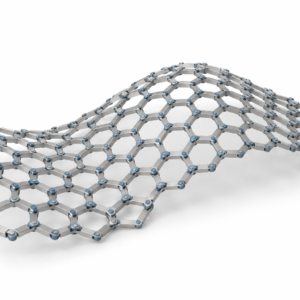
A honeycomb of robotic units settles into a shared rhythm in laboratory experiments. The new Nature paper explores a route to time-crystalline order.
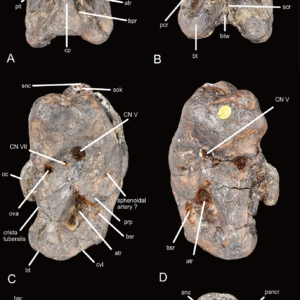
A skull fragment kept in London since 1924 has been identified as Invictibellatrix amberina, Europe’s first known megaraptoran dinosaur.