Ann Johnson had things to say. A brainstem stroke had made saying them aloud extraordinarily difficult. Years later, a research team found a way to turn her attempts to speak into a computer-generated voice modeled on recordings from before her injury.
The achievement came through an experimental brain implant, not a recovery of ordinary speech. Johnson joined the UC San Francisco and UC Berkeley clinical trial in 2022. Results reported in 2023 demonstrated speech and an animated avatar; a follow-up published on March 31, 2025, brought the spoken output much closer to the moment she tried to say something.
The person behind the computer voice
Before her stroke in 2005, Johnson taught high-school math and physical education in Canada. She was 30 when her life changed. Her subsequent recovery restored some movement and expression, but communication remained painstaking. In its 2023 account, UCSF described a device she controlled with small movements of her head, producing about 14 words a minute.
That makes an ordinary interruption sound different. Most conversations move on before someone can spell out a carefully formed reply. A faster communication system could make space for its user to take a turn, rather than simply deliver a message after everyone else has finished.
Johnson learned about the research after another participant with paralysis helped demonstrate a brain-to-text system. For her trial, the investigators went further: they wanted audible speech and facial animation as well as words on a screen.
A voice with a familiar history
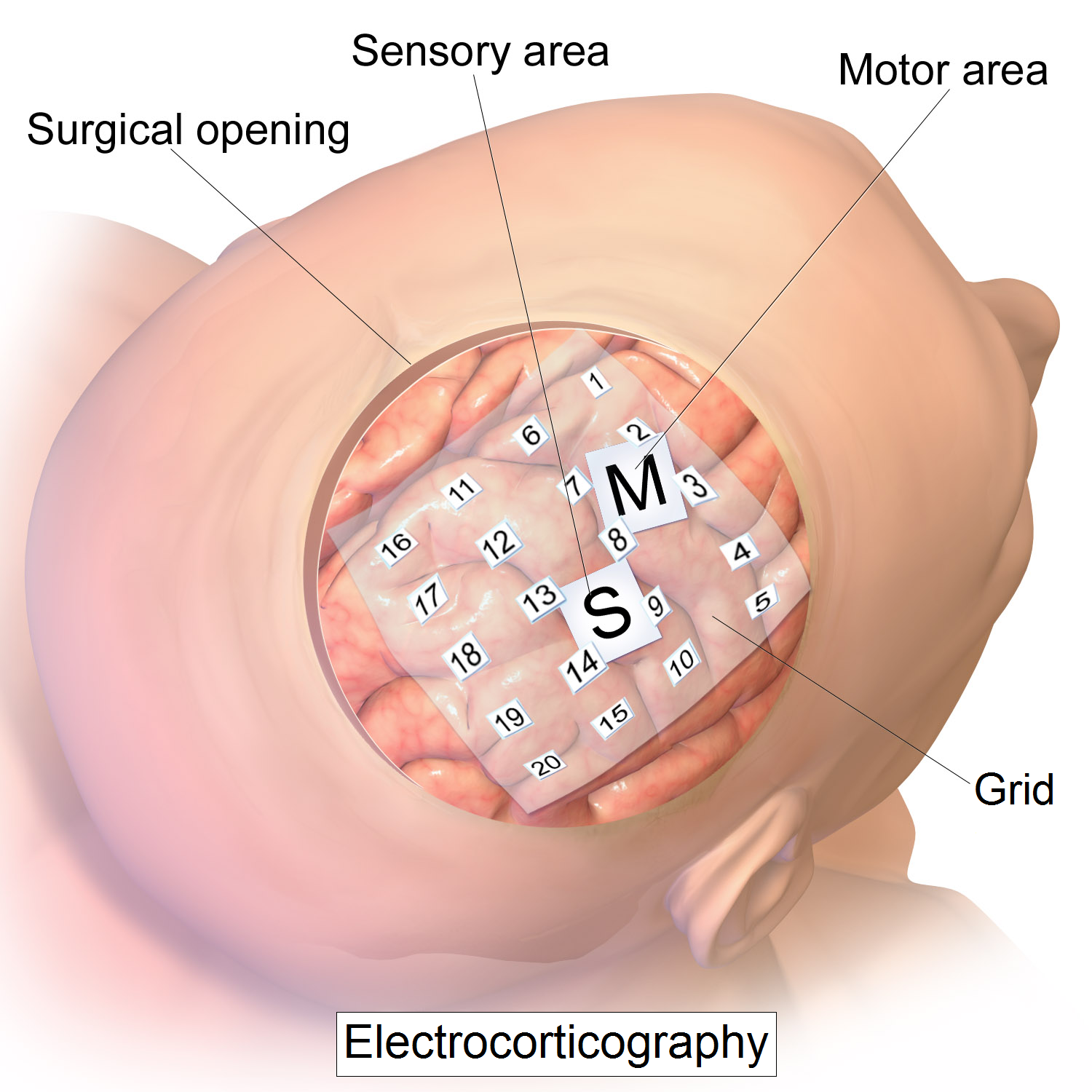
A thin array of 253 electrodes recorded activity from the surface of Johnson’s brain. A connection through a port in her head carried those signals to computers. The system was trained while she repeatedly attempted to say prompted phrases, allowing the software to connect patterns of activity with speech sounds.
The familiar sound of the output mattered, too. A recording of her wedding speech helped the team personalize a synthetic voice. It was a reconstruction, with audible limitations, rather than a perfect copy of her natural speech. The 2023 work also paired the output with an animated face.
UCSF’s official video shows Johnson using the experimental system. It documents that earlier trial, not a device being sold to patients or a demonstration of the later streaming update.
Why a shorter wait matters
The 2025 study in Nature Neuroscience tackled a practical weakness: waiting for a whole attempted sentence before producing its spoken version. The researchers developed a streaming approach that processed incoming neural activity in 80-millisecond increments and generated speech as an ongoing output.
Berkeley’s March 2025 explanation reported the first sound emerging within about one second of the detected attempt to speak, compared with an approximately eight-second delay for a sentence in the earlier work. The authors also tested words outside the training vocabulary, examining whether the model could use learned speech components beyond familiar examples.
This was intentional communication. Johnson had to attempt speech; the system was not a general-purpose reader of private thoughts. Nor did an implant repair the injury responsible for her paralysis. It offered another route from a deliberate effort to communicate to something another person could hear.
The part a breakthrough headline can leave out
There is an important later detail. In an August 2025 account, Berkeley reported that Johnson had her implant removed in February 2024 for a reason unrelated to the trial. She continued giving researchers feedback using her other communication technology. The published results should not be mistaken for a claim that she now relies on this implant in daily life.
The National Institutes of Health’s account also stressed the need to test the approach in more people. Researchers still wanted to improve expressive features such as tone and volume. Reliable, convenient everyday use remained a goal.
Johnson’s contribution was already concrete: she helped show that years without fluent speech had not erased the signals needed to attempt it. The experiment gave those signals an audible form, and gave researchers a clearer picture of what a more useful communication device could become.