Frogs began disappearing from a Brazilian forest decades ago, leaving researchers with an ecological cold case. Some of the evidence survived in museum jars: preserved animals collected before and after the losses.
A study announced by the Smithsonian on October 14, 2026, links those declines at the Boracéia Biological Station to chytrid fungus. Comparing historical specimens with living frogs also revealed a more hopeful twist: many species appear to have recovered while the pathogen is still present.
A before-and-after test
The paper in Molecular Ecology reports testing 327 preserved frogs. None of the 230 collected before the 1979 decline tested positive for the fungus. Among 97 collected in the 1980s, 57 did.
That contrast supports the idea that an invading pathogen helped drive the collapse. The researchers checked for contamination and examined whether damaged museum DNA could explain the detection pattern.
The strangest clue came from the survivors
Species that had not visibly declined often carried infections. Yet the preserved specimens from species known to have declined tested negative.
The researchers suggest a grim explanation: highly susceptible infected frogs may have died before collectors could find them, while more tolerant species survived long enough to be sampled. That is an interpretation of the pattern, not direct proof of what happened to every missing frog.
Returning to the forest
Researchers made six field visits between 2022 and 2024. They found 12 of the 17 species represented in the historical collection; the other five remain unaccounted for at the site.
Modern infection patterns suggest that greater tolerance may have helped some populations persist and recover. The team cautions that its findings concern Boracéia and cannot simply explain declines throughout the Atlantic Forest.
The jars preserved more than a record of which animals lived there. They retained traces that could be tested decades later, turning a collection assembled for earlier questions into evidence for a mystery its collectors could not resolve.
Sources and image credit
Smithsonian announcement, October 14, 2026; Boyette and colleagues, Molecular Ecology.
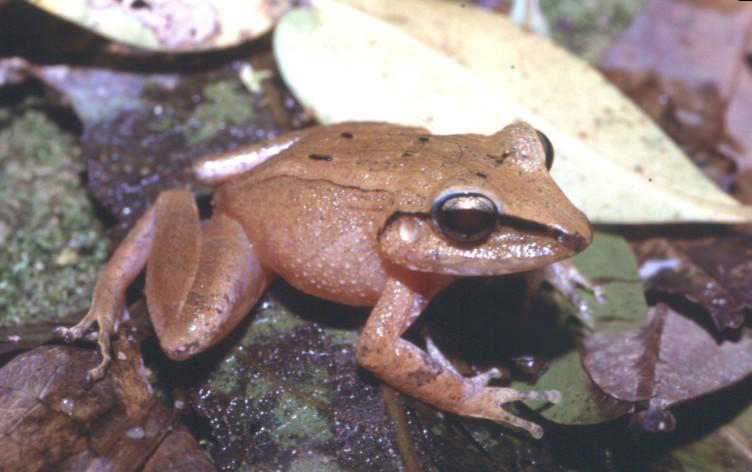
Image: Haddadus binotatus, a species included in the research, shown as context rather than a confirmed study individual or location. Photo by Ariovaldo Giaretta via Wikimedia Commons, CC BY-SA 2.5. Existing Commons version, no additional alteration.