Ever wondered how a hawk keeps track of a moving meal while the ground rushes beneath it? Researchers put tiny surround-view cameras on two Harris’s hawks, giving that question a spectacular new vantage point.
The Nature Methods study, published November 3, 2026, combined head-mounted footage with a drone-built 3D map. The birds flew outdoors between perches and intercepted thrown targets.
The target stays ahead
During pursuit, the hawks kept the airborne target directly in front of their heads, moving smoothly. After the catch, their head movements changed to quick, step-like turns as they headed toward a perch.
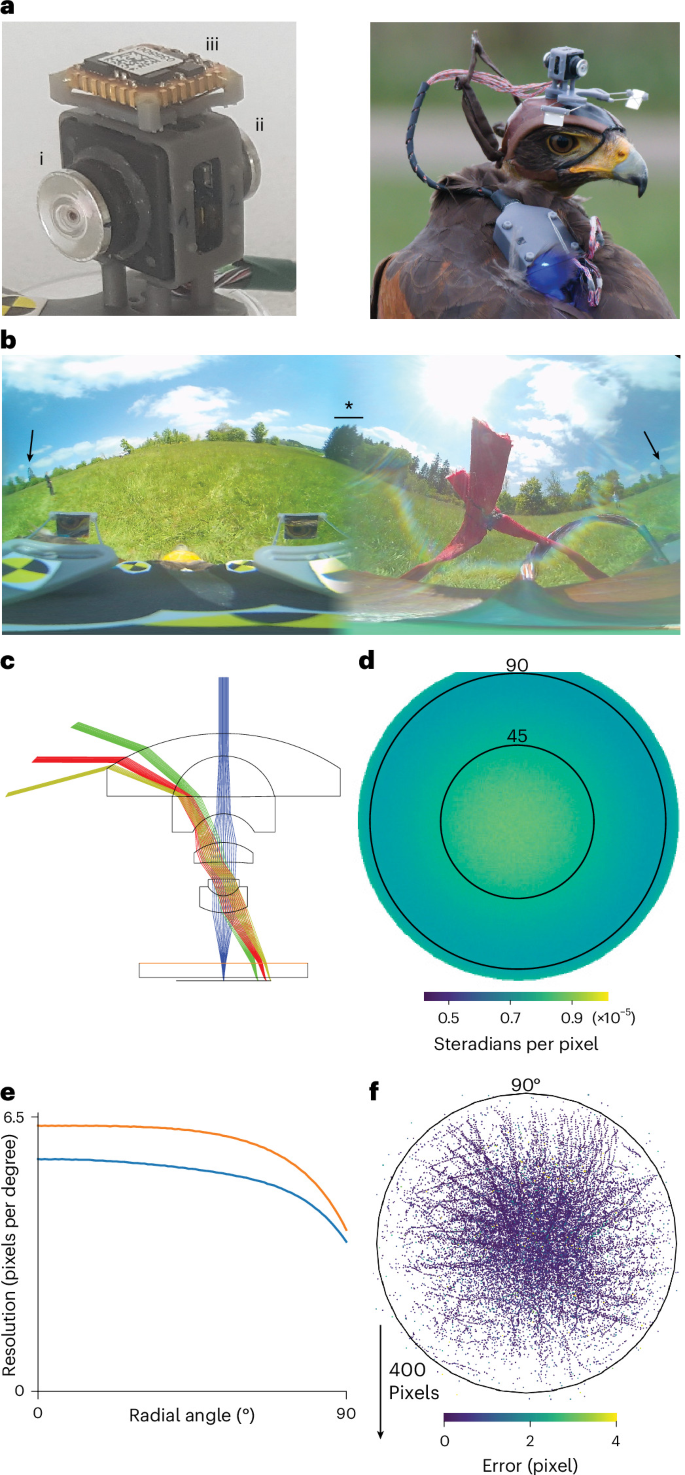
The camera unit weighed six grams, but the complete equipment package weighed 40.5 grams. That distinction matters when picturing the feathered camera crew.
Watch the researchers’ front-and-back camera footage. The paper also provides 360-degree versions.
A close look, with limits
These were trained hawks catching experimental targets, not an unrestricted study of wild hunting. Still, the method lets scientists connect a bird’s flight path with the fine movements that a distant observer could easily miss.
Getting closer to a bird’s perspective
The challenge goes beyond filming a dramatic catch. A separate study published in 2023 used motion capture and a reconstructed laboratory to simulate the visual information available to flying hawks. Its examples included pursuing a moving target and avoiding obstacles.
That earlier work explains why head movements matter: birds do much of their looking around by turning their heads, while their eyes move through a comparatively limited range. Reconstructing those movements can help researchers investigate how vision guides flight.
A camera’s view is still a measurement, not direct access to an animal’s experience. But this is a wonderfully close seat for watching the mechanics of a catch.
Research figure: camera hardware, a Harris’s hawk wearing the equipment, a panoramic camera view and optical measurements. Credit: Voit, Sawinski and colleagues, Nature Methods (2026), Figure 1, CC BY 4.0. Unchanged.