An electric eel rises out of the water, presses against a fake alligator’s head, and lights up its LEDs. The plastic predator is a measuring prop. The electricity is coming from the fish.
Vanderbilt University described the experiment on June 6, 2016. Biologist Kenneth Catania found that electric eels can defend themselves by making direct contact with a threat above the water, delivering increasingly powerful shocks as they rise.
A leap that changes the circuit
Catania measured voltage and current during attacks on a conductive target, using LEDs to make the discharges visible.
The higher the eel climbed, the stronger the electrical effect on the target. This was a defensive response to a large, partly submerged conductor, rather than an eel chasing prey onto land.
The original research paper explains why direct contact matters. Underwater, the discharge spreads through the surrounding water. During a leap, the eel’s lower jaw makes contact with the target while its tail remains in the water. The target becomes part of the circuit, and more of the eel’s electrical output is directed through it.
The horse story behind the experiment
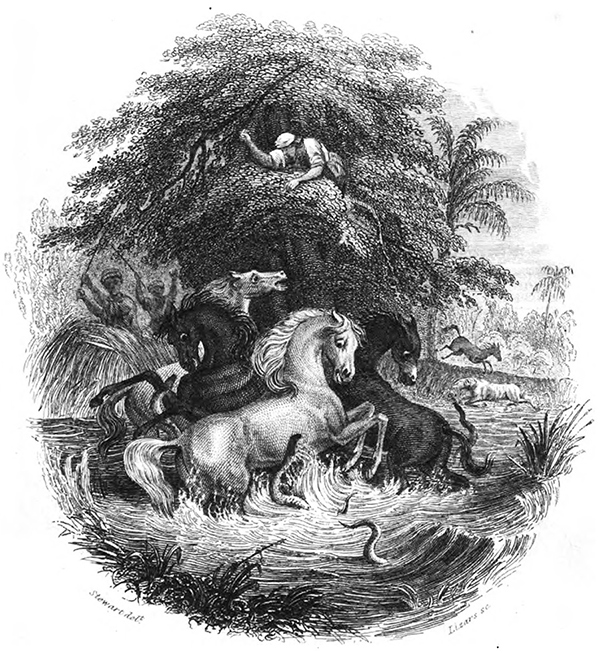
That behavior gave scientific support to an extraordinary account from Alexander von Humboldt. In March 1800, he described fishermen using horses to provoke electric eels in a muddy pool. The eels pressed against the animals while discharging, eventually exhausting themselves enough to be collected.
The laboratory work did not recreate every detail of that historical episode. It demonstrated a defensive behavior consistent with an account that later investigators had questioned. Catania suggested that such a defense could help eels trapped in small pools during the Amazonian dry season, when they would be vulnerable to predators approaching from land.
He later measured the shock on himself
In follow-up work announced September 14, 2017, Catania used a small juvenile eel and his own arm to measure the circuit more directly. He underwent ten encounters, using an instrumented arrangement that returned current from his arm to the water.
That study addressed the resistance and current involved when the target is a person, rather than just a laboratory prop. It was controlled research, not a demonstration to imitate. The striking lesson is that the eel’s body movement helps it deliver the electricity it generates: where it touches a threat can change the shock that threat receives.