
A Star Has Erupted at Least 27 Times. X-Rays Point to a Hidden Companion.
AT 2016blu keeps flaring on a roughly 113-day cycle. A carefully timed Chandra observation points to a black hole or neutron star taking material from it.
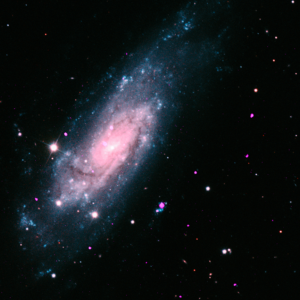
AT 2016blu keeps flaring on a roughly 113-day cycle. A carefully timed Chandra observation points to a black hole or neutron star taking material from it.
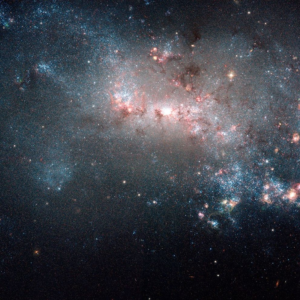
A census of 37 dwarf galaxies found that most of the oxygen their stars produced is missing. The mystery is how far it traveled.
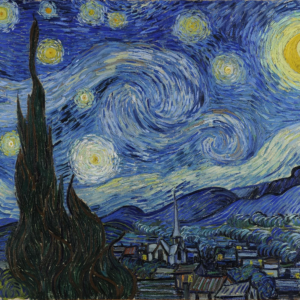
A new sky reconstruction points to July 22, 1889. Van Gogh’s June letter and a disputed view of the landscape keep the famous painting’s date from becoming a solved mystery.
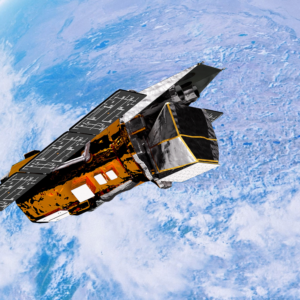
NASA’s Neil Gehrels Swift Observatory has ended its nearly 22-year mission, leaving behind a vast public archive and a rapid-response model that reshaped astronomy.
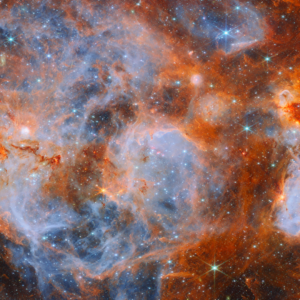
Webb’s new N159 panorama reveals ionized bubbles, cold molecular filaments and generations of young stars forming across one neighboring-galaxy nursery.
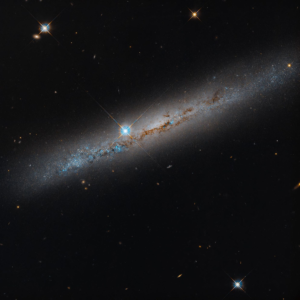
Hubble’s new edge-on portrait of NGC 1827 reveals dust lanes, young stars and a survey testing cosmology’s small-galaxy predictions.
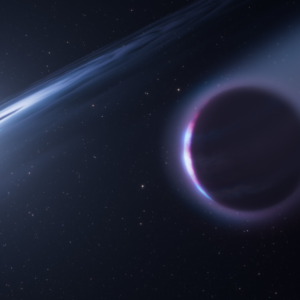
A 25-year-old Hubble puzzle may point to a gas giant forming from the debris of a star’s death. The planet is still a candidate, but the clue is remarkable.
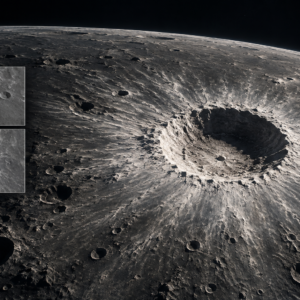
A natural impact carved a 728-foot crater on the Moon. NASA found the fresh scar by comparing old orbital images—and discovered the blast changed the surrounding ground, too.
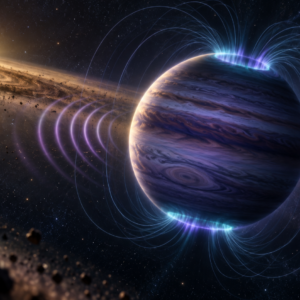
A preprint reports radio bursts localized to the giant exoplanet Beta Pictoris b. The authors interpret them as likely auroral emissions tied to a magnetic field—not an alien signal.

The “great conjunction” of Jupiter and Saturn will make it possible for the Star of Bethlehem to be visible from Earth again 800 years later. The year 2020 could not say goodbye without first surprising with another astronomical phenomenon that will occur after several centuries. During December, the famous Star of Bethlehem will once again… Read more »