
Webb’s New N159 Panorama Catches a Stellar Nursery at Every Stage of Birth
Webb’s new N159 panorama reveals ionized bubbles, cold molecular filaments and generations of young stars forming across one neighboring-galaxy nursery.
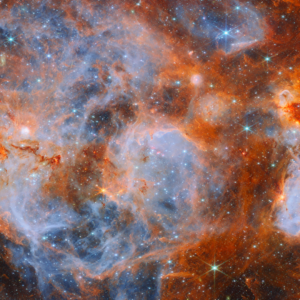
Webb’s new N159 panorama reveals ionized bubbles, cold molecular filaments and generations of young stars forming across one neighboring-galaxy nursery.
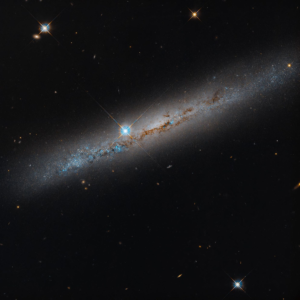
Hubble’s new edge-on portrait of NGC 1827 reveals dust lanes, young stars and a survey testing cosmology’s small-galaxy predictions.
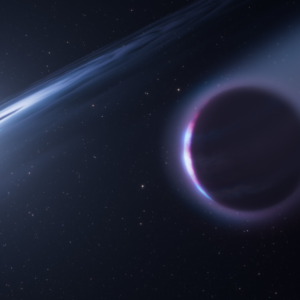
A 25-year-old Hubble puzzle may point to a gas giant forming from the debris of a star’s death. The planet is still a candidate, but the clue is remarkable.
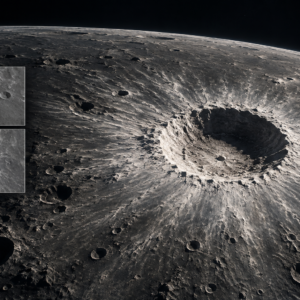
A natural impact carved a 728-foot crater on the Moon. NASA found the fresh scar by comparing old orbital images—and discovered the blast changed the surrounding ground, too.
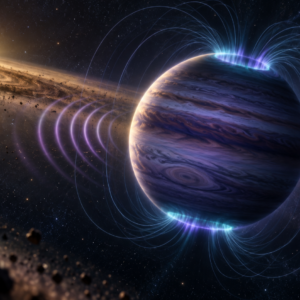
A preprint reports radio bursts localized to the giant exoplanet Beta Pictoris b. The authors interpret them as likely auroral emissions tied to a magnetic field—not an alien signal.

The “great conjunction” of Jupiter and Saturn will make it possible for the Star of Bethlehem to be visible from Earth again 800 years later. The year 2020 could not say goodbye without first surprising with another astronomical phenomenon that will occur after several centuries. During December, the famous Star of Bethlehem will once again… Read more »

Fans love when science fiction borders on reality, at least on this kind of aspect. Scientists have discovered a planet very similar to Mustafar from ‘Star Wars’, it is not just any planet, one of the most important of the entire saga. Astronomers discovered an exoplanet with extreme conditions just outside our Solar System, with… Read more »

Of all the great unknowns in outer space, the dark universe might just be the most mysterious. Learn the basics of dark energy and dark matter and how scientists study this nearly undetectable realm of the cosmos.

Observatories including NASA’s Hubble Space Telescope found that the interstellar object named ‘Oumuamua gained an extra boost of speed, which likely comes from comet-like jets of gas. Read more: https://www.nasa.gov/press-release/our-solar-system-s-first-known-interstellar-object-gets-unexpected-speed-boost Find more Hubble visuals here: http://hubblesite.org/news_release/news/2018-25 Find the science paper…