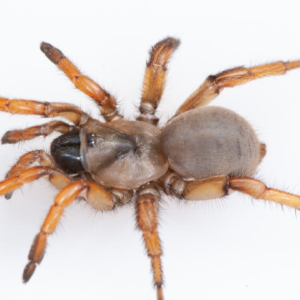
A firefly that had not been documented since 1983 has returned to the scientific record—not because somebody happened to photograph an especially pretty blink, but because two observers recognized a very particular amber light code. The similar firefly, Pyractomena similis, was confirmed this summer at sites in Virginia and Delaware after 43 years without a verified sighting.
The payoff is wonderfully specific. Males do not simply glow; they send a rapid string of roughly 10 to 20 short amber pulses, pause, and begin again. That rhythm alerted researchers to an insect hiding in ordinary-looking Mid-Atlantic meadows. The rediscovery was announced October 22 by Re:wild and the Xerces Society, then updated October 27 when the organizations confirmed that two independent sightings had occurred.
The flash came before the microscope
Christopher Heckscher, an entomologist and ecologist at Delaware State University, was deliberately searching for the species rather than enjoying a lucky backyard encounter. Re:wild had placed the similar firefly on its list of most-wanted lost species, and Heckscher surveyed likely habitat in Maryland and Delaware during May and June.
Two early stops produced no similar fireflies. On June 3—the final night of his planned survey—Heckscher visited a mature meadow in Delaware’s Brandywine Creek State Park. The grasses, shrubs and low vegetation had largely been allowed to grow naturally. As darkness arrived, he counted roughly eight to 12 males producing the long, rhythmic amber sequence he had been hoping to see.
The pattern made the species a strong candidate, but a light show was not enough for a scientific identification. Heckscher examined one specimen under a microscope and found physical characteristics unique to the similar firefly. That confirmation mattered because its common name is almost a warning label: it looks much like other fireflies sharing its range.
Meanwhile, neurobiologist and amateur firefly researcher Aljoscha Nern had recorded the same species in Virginia. Re:wild’s October 27 update says Nern observed it near Washington, D.C., on May 15 and confirmed the identification under a microscope on July 6. Heckscher’s Delaware specimen was confirmed July 2. The sightings therefore were independent, not a single population being counted twice.
“Lost” did not necessarily mean extinct
In conservation work, a species can be “lost to science” when it has gone at least a decade without a documented record. That label describes an evidence gap, not a declaration of extinction. The similar firefly may have been overlooked because it is nocturnal, active during a short breeding season, visually similar to related species and dependent on habitat that does not always look precious from a roadside.
Its preferred setting appears to be fields and meadows near water. Those places can disappear without a bulldozer: regular mowing, grazing or other management can simplify the dense, messy vegetation the insect seems to use. Brandywine’s mature meadow was allowed to remain unusually wild, which may be a major reason the signal was still flashing there.
The distinction between “gone” and “not recently recorded” is the heart of this story. The Firefly Atlas tracks nearly 30 lost firefly species in the United States and Canada. The new review discussed by Re:wild and Xerces identifies 28—about 16 percent of the roughly 178 native species in the two countries. Some may be rare or declining. Others may be waiting for someone who knows when, where and how to look.
A tiny code with a much bigger message
Firefly flashes are courtship signals, and different species have evolved different timing, color and rhythm. For the similar firefly, that behavior became an identification tool before anatomy supplied the final proof. The authentic flash-pattern videos released with the announcement can be found in Re:wild’s official media collection. They are hosted as downloadable video files rather than on an approved embeddable provider, so we are linking to the source instead of forcing an unsupported player.
The rediscovery does not answer every conservation question. Researchers still need surveys to establish the species’ present range, population size and stability. It also should not be interpreted as evidence that every missing species is secretly thriving. Habitat loss and extinction remain real possibilities, and the absence of data makes it harder to tell which situation applies.
But this one result changes a blank space into a research program. Scientists now know where the similar firefly persists, what habitat supported it, and which luminous password helped reveal it. There is something fitting about a creature returning to view by sending the same message it had probably been transmitting all along. We simply learned how to read the blinking.
Featured image: illustration of the similar firefly by Mauricio Alvarez for Re:wild. Re:wild’s media library marks the asset for Search for Lost Species communications; used here for editorial reporting on this rediscovery.