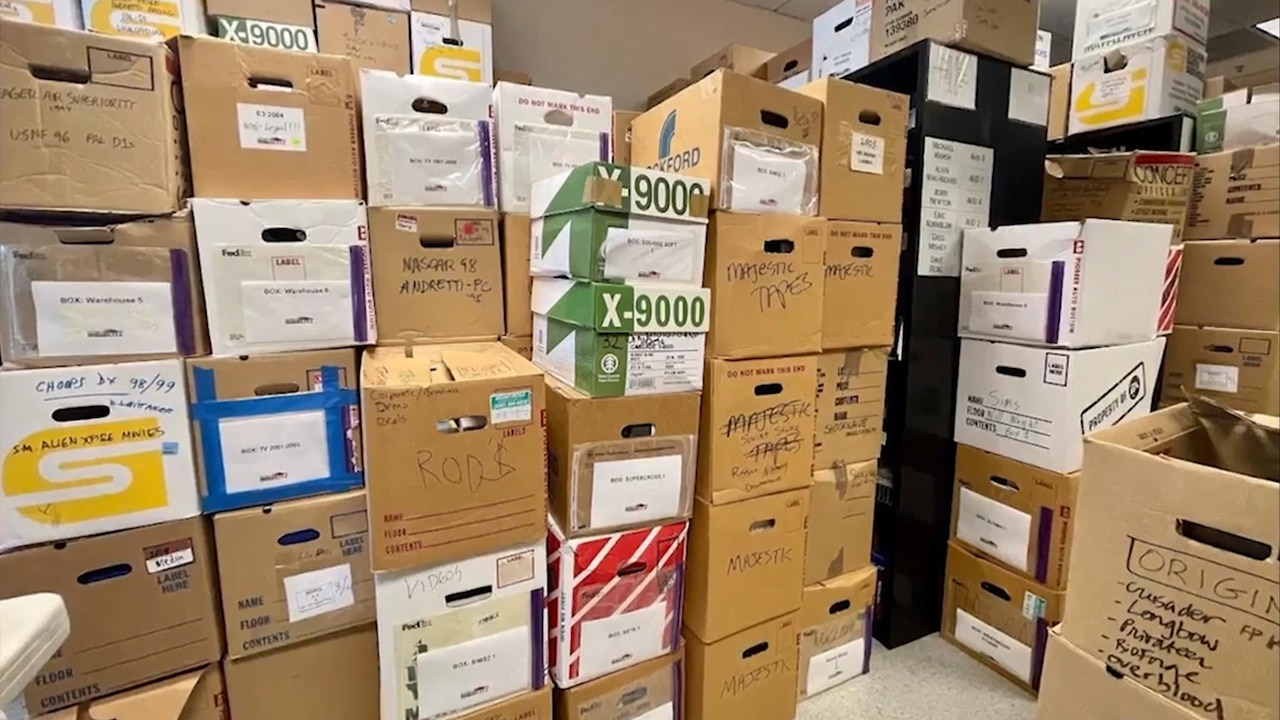
When Electronic Arts producer Jim Vessella entered a physical media vault at the company’s Redwood Shores headquarters in March 2022, he found the raw material of gaming history stacked floor to ceiling: nearly 20,000 tapes, discs, reels and other archival assets. Some contained master footage and source material that the company no longer had in an immediately usable digital form.
Four years of cataloging and conversion turned that room into something players can actually experience. EA says its preservation team digitized about 6,000 assets containing roughly 2,500 hours of material, recovered masters for games including Wing Commander and Road Rash, and used the archive to help build seven new anniversary editions released alongside a 25-game classics collection on November 5.
A game archive built for formats that disappear
Old games are software, but much of the material used to make and market them was stored on physical formats: Betacam and VHS cassettes, D1 digital videotape, film reels, CD-ROMs and other media tied to equipment that becomes harder to find every year. A tape can sit safely on a shelf and still become inaccessible when the correct deck, cable or decoding hardware vanishes.
EA’s first-person account of the preservation project describes the 2022 discovery as the start of a major inventory. Each item had to be identified, cleaned when necessary, matched with suitable playback equipment and converted into digital files. The team also had to decide which version was authoritative. A finished commercial release, a master tape, a workprint and a promotional edit can all preserve different pieces of the same game.
The sheer number—nearly 20,000 physical assets—makes the vault sound like a treasure room. In practice, it was closer to an enormous unsorted quest log. A label might identify a title but not the contents, while aging media could require careful handling before anyone knew whether it held a trailer, cinematic sequence, audio recording or development artifact.
Wing Commander’s live-action footage survived on tape
The most immediately understandable payoff is full-motion video. Games such as Wing Commander III, Wing Commander IV and Wing Commander: Prophecy used live actors and elaborate sets to place cinematic scenes between missions. The original footage was captured for television-era formats and then compressed heavily to fit the storage and playback limits of 1990s PCs.
A modern re-release built only from the old game files would reproduce those limitations. Returning to source tapes allows a restoration team to work from footage with more picture information before it was reduced for CD-ROM. EA says the project located hundreds of tapes connected to the series, including material used to restore hundreds of full-screen and in-game communication clips.
The archive did not make the process automatic. Footage still had to be matched to the correct scene, synchronized with game logic and prepared for modern displays. Preserving an image is not the same as proving where the image belongs. Community experts and modders helped connect historical media with the software that calls it.
Road Rash masters came back from the analog era
Road Rash presents a different version of the same problem. Its live-action sequences and music-video attitude are inseparable from its 1990s identity, but the surviving playable version does not necessarily contain the highest-quality source for every clip. The vault supplied master material that could be captured again rather than enlarged from already-compressed game files.
That distinction is why physical preservation still matters in a digital industry. A playable disc may preserve the final experience while losing the source ingredients needed to rebuild it cleanly. Source tapes can contain frames, color information and audio detail that never reached the consumer release.
The result is not a claim that every asset in the vault has been restored. EA reports that roughly 6,000 of nearly 20,000 items had been digitized by April 2026. That is substantial progress and also an honest measure of how much remains.
The November release is evidence, not the whole story
EA’s November 5 launch announcement packages 25 older games for current PCs, with seven anniversary editions drawing on the preservation effort. GOG’s own preservation-focused showcase provides another current view of how restored EA titles reached players.
The release list is not the strongest reason to care. The unusual development is that obsolete professional media, stored in a corporate vault and unreadable on ordinary computers, became a source for new versions instead of remaining an inventory spreadsheet. The archive changed the available evidence. It gave restorers better footage, clarified what survived and exposed gaps that could be filled with help from the people who had studied these games for years.
Preservation is a pipeline, not a nostalgia button
Classic-game rereleases often look effortless from the outside: select a title, click “export,” and add a storefront page. The vault story shows the opposite. Preservation depends on storage, working legacy hardware, format specialists, legal research, software engineering, documentation and community knowledge. Lose any part of that chain and a game may remain technically owned yet practically unreachable.
The verified payoff is therefore physical and specific. EA found nearly 20,000 archival items, digitized 6,000 of them, recovered master source material and fed that work into seven new anniversary editions. The past did not simply wait intact for a download button. People had to find it, play it back and reconnect it to code.
Additional current reporting is available from Tom’s Hardware. Featured image: the physical media vault at EA’s Redwood Shores headquarters before reorganization, showing boxes of archival game tapes and media. Credit: Electronic Arts. Official company editorial image used for reporting; served at 1280 × 720 and otherwise unchanged.