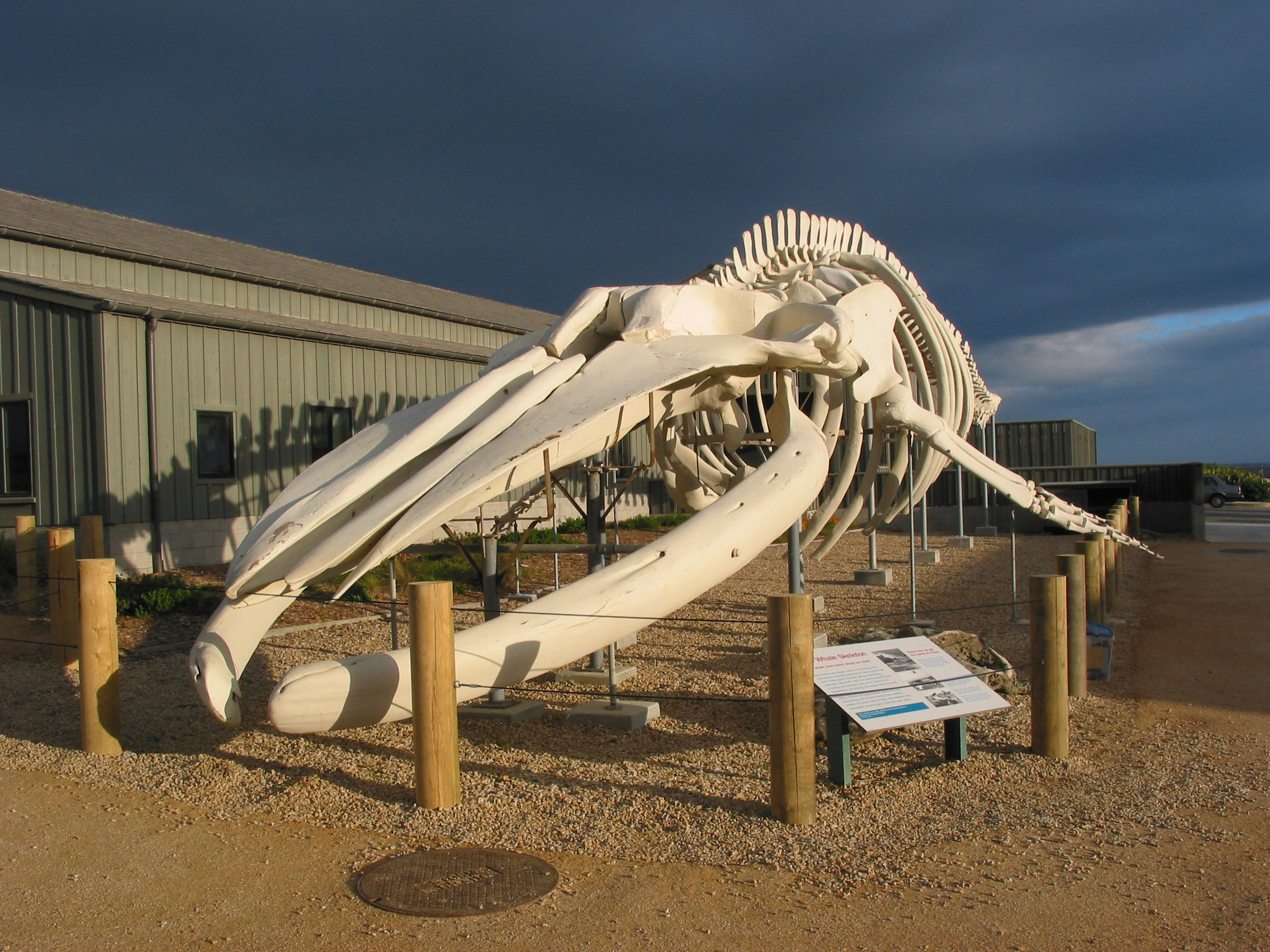
An 87-foot blue whale skeleton is returning to its longtime perch above Monterey Bay after a three-year rescue that sounds part museum conservation, part materials-science experiment and part extremely large-scale 3D-printing job. Known as Ms. Blue, the skeleton was repaired with a putty inspired by marine biomaterials and replacement bones printed from recycled material.
The important part is why those unusual materials were needed. Decades of salt air had cracked bones and corroded the steel structure holding them up outside the Seymour Marine Discovery Center at UC Santa Cruz. Some pieces could be saved. Others had deteriorated too far. Rather than rebuild a monument to ocean life with a heap of conventional plastics and harsh restoration materials, the team went looking for alternatives that fit the exhibit’s conservation message.
A whale skeleton too important to let collapse
Ms. Blue washed ashore on Pescadero Beach in 1979. Volunteers recovered the bones, and the skeleton eventually became a towering outdoor landmark at the Seymour Center. Millions of visitors have passed beneath an animal whose 87-foot frame makes even a parking lot feel like a natural-history cathedral.
Outdoor display also meant constant exposure to wind, moisture and salty coastal air. By 2023, the damage had become serious enough that the center lowered major bones to prevent what its restoration project page describes as a potential catastrophic collapse. The mount itself needed redesigning, while cracked or missing bones demanded very different kinds of repair.
That set up the project’s central problem: how do you preserve one of the largest blue whale skeletons on display without using methods that contradict the environmental lesson the whale represents?
The bone putty began with shrimp shells
UC Santa Cruz professor Marco Rolandi and graduate researcher Zoë Weber developed a repair material using chitosan and calcium carbonate. Chitosan can be derived from the shells of shrimp, lobsters and other crustaceans. Calcium carbonate is a mineral found throughout marine life. Mixed in the right proportions, the ingredients form a moldable putty that can fill cracks and harden into a material with useful strength and a little flexibility.
The idea borrows from biomineralization. Human bone combines a flexible polymer, collagen, with a hard mineral. Many marine organisms make strong structures using a different polymer-mineral pairing. The restoration team adapted that logic instead of reaching immediately for a petroleum-heavy filler.
There is a pleasing full-circle detail here: blue whales eat enormous quantities of krill, small crustaceans whose bodies contain the same kind of shell material that inspired the repair. Ms. Blue’s bones were built by a life spent eating tiny marine animals, and shellfish waste is now helping hold those bones together decades later.
The Seymour Center’s official documentary below follows the putty’s development and use. It depicts this restoration, not a generic whale reconstruction.
When a bone could not be saved, the team printed one
Repairing cracks was only half the challenge. Some bones were already too damaged to preserve, and parts of the skeleton had been missing for years. Local company SwellCycle used large-format 3D printing to create replacements, building replica bones from recycled material instead of carving them from foam or casting them in conventional plastic.
That approach also solved a geometry problem. Whale bones are huge, irregular and difficult to reproduce with ordinary molds. Digital models can be adjusted, scaled and printed as hollow structures that are lighter than solid replicas. The replacements then fit into a new cradle-like armature designed to support the skeleton without repeating the stresses that helped damage the earlier display.
The result is not a claim that every visible bone is original. It is a transparent conservation compromise: preserve what can be preserved, reproduce what has been lost, and make the difference part of the story visitors learn.
Ms. Blue returns with the repair science on display
The restoration is now complete enough for the Seymour Center to welcome Ms. Blue back. A Marine Science Fest on Sunday, November 8, includes a public return ceremony and hands-on activities about the bone reconstruction. Current local reporting from Lookout Santa Cruz confirms that the skeleton is back after three years away and describes the recycled-material printing and shell-derived putty behind the work.
That makes Ms. Blue more than a restored display. She is now a full-size demonstration of how museums can treat conservation as an engineering problem with environmental consequences. The skeleton still tells the story of the largest animals ever to live. Its repaired bones also tell a newer story about what humans choose to build with—and what we can build differently.
Featured image: an archival 2007 photograph of Ms. Blue before the current restoration by Go Card USA, via Wikimedia Commons, used unmodified under the Creative Commons Attribution-ShareAlike 2.0 license.