A dinosaur leg bone from Brazil has delivered a startling claim: microscopic structures inside it may preserve chemical traces of blood from 115 million years ago. The chemistry is exciting. Whether those structures really are red blood cells is already being debated.
In a study published in PNAS on November 2, 2026, an international team led by Curtin University’s Kliti Grice examined limb bones of Aratasaurus museunacionali. Researchers report heme-related molecules associated with mineralized structures inside the bone’s vascular canals. Heme is the iron-containing component of hemoglobin that helps blood transport oxygen.
According to Curtin’s November 3 announcement, the team also identified collagen-related amino acids. They propose that rapid burial in an oxygen-poor, microbe-rich setting, together with mineralization involving hausmannite, helped preserve this extraordinary chemical record.
The dinosaur behind the discovery
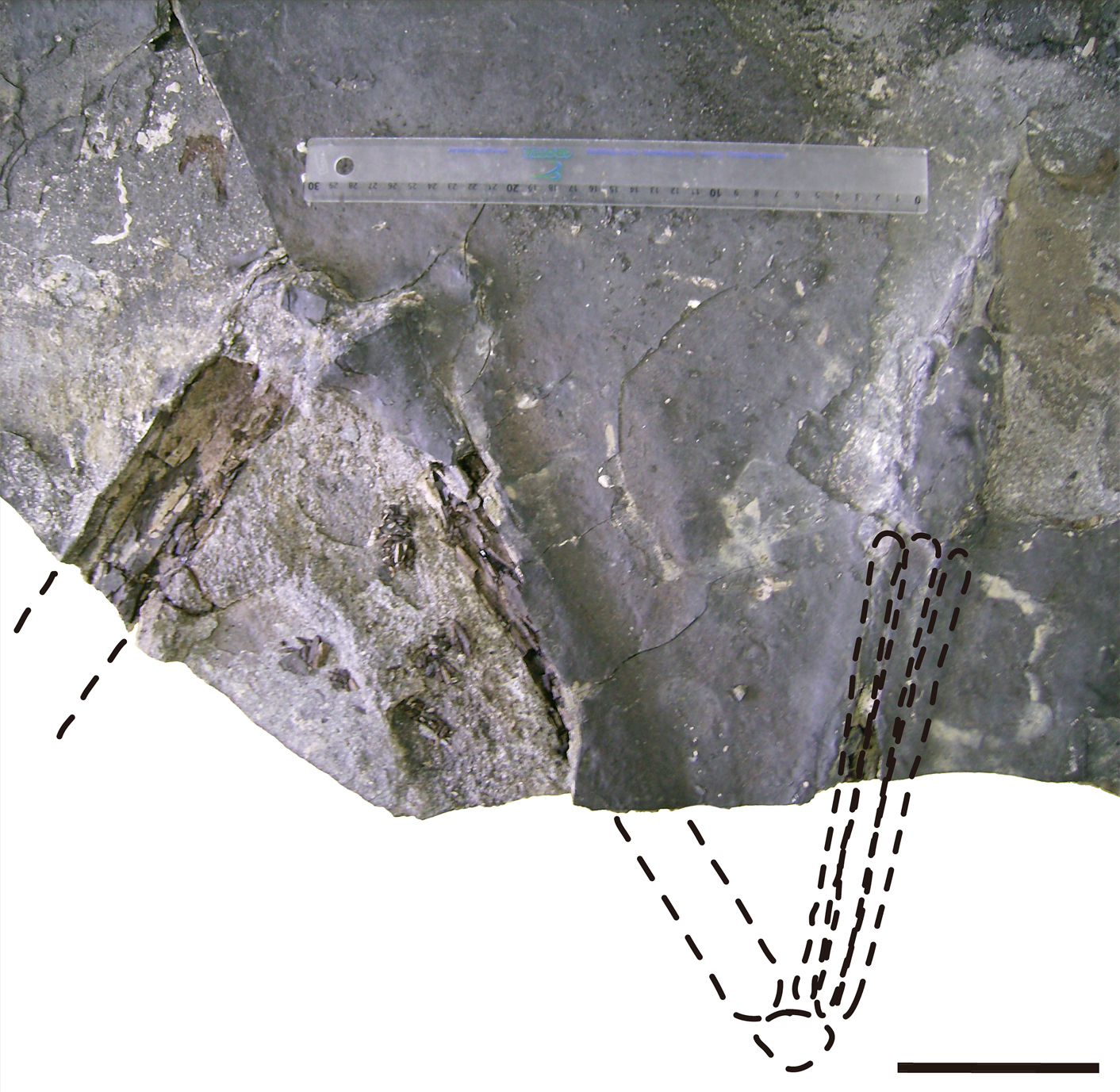
The original 2020 species description identifies the specimen as a juvenile, estimated at roughly 3.12 meters long. Its surviving right hind limb includes portions of the thigh, shin and foot, preserved in dark shale from northeastern Brazil’s Araripe Basin.
The fossil has already survived a more recent disaster. Researchers reported that it was on loan for preparation at Brazil’s Museu Nacional and escaped damage in the devastating September 2018 fire.
Why scientists are keeping the question open
Paleontologist Mary Schweitzer, who was not involved in the new study, told Live Science that the structures do not convincingly match reptile and bird red blood cells. Those cells retain nuclei, which typically produce a bulge. The reported structures appear concave and unusually small.
Schweitzer was more accepting of the heme and collagen findings, ABC reported. Another independent researcher, Mauricio Barbi, stressed that the evidence concerns chemical remnants and mineralized structures, rather than intact blood cells or preserved hemoglobin.
ABC also reported that tests for ancient DNA were negative. For now, the discovery offers a compelling question about how much biological information fossil bones can retain, with the identity of those tiny structures still unresolved.
Image: Aratasaurus museunacionali holotype before preparation, published in 2020. Credit: Juliana Manso Sayão, Antônio Álamo Feitosa Saraiva, Arthur Souza Brum, Renan Alfredo Machado Bantim, Rafael Cesar Lima Pedroso de Andrade, Xin Cheng, Flaviana Jorge de Lima, Helder de Paula Silva and Alexander W. A. Kellner, Scientific Reports, via Wikimedia Commons, CC BY 4.0. No changes made.