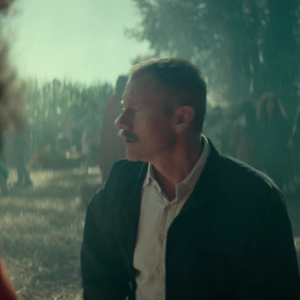
Silent Hill: Townfall is adding a new way into its unsettling island setting: a comic about a harbour master and a staircase that should not exist. Konami and 2000 AD announced The Dock House on September 10, bringing the game’s writer and director Jon McKellan together with artist David Roach.
The appealing part is the scale. Instead of promising a guide to every secret, this companion story starts with one person, one workplace and something terribly wrong beneath it. For psychological horror, that can be a more inviting proposition than a catalogue of monsters. The unsettling question is not how large the world is. It is whether you ever understood the place you thought you knew.
The Dock House: the confirmed details
Konami’s official announcement describes the comic as a prequel and narrative companion set on St. Amelia. It follows Douglas, a longtime harbour master whose familiar routine is disrupted by a mysterious descending staircase. Roach supplies the pencils, with McKellan writing.
The story appears in 2000 AD Prog 2500. Print availability is September 16, 2026 in the UK and September 30 in the United States; digital access is offered through the publisher’s webstore and app. The Beat’s September 10 report corroborates the creative team, premise and issue details.
Konami lists the game itself for September 24 on PS5, Steam and the Epic Games Store. That means the US print comic arrives after the announced game launch. Calling it a prequel describes its narrative relationship, not a universal reading order based on shop dates.
A companion story should add perspective
Our take: the most promising word in this announcement is “companion.” A good tie-in can change the way a setting feels without turning into an instruction manual. It can give a minor location emotional weight, make an ordinary job seem precarious, or suggest that another person has been struggling just beyond the main character’s view.
That is particularly useful in horror. An explanation can be satisfying, but explaining everything risks making a frightening place feel manageable. Once every strange event has a label, the reader may start sorting evidence instead of feeling uncertain. A side story has room to deepen that uncertainty while still giving its own protagonist a complete dramatic experience.
This is our analysis of the opportunity, not a review of the finished comic. Konami says the story is intended to expand the setting while preserving the game’s mysteries. Whether it achieves that balance will depend on what the full story reveals, withholds and asks readers to infer.
Why a harbour master is a useful starting point
A familiar workplace gives a horror story a baseline. Someone who has spent years maintaining a place should have a strong sense of its ordinary dimensions and rhythms. When something impossible interrupts that knowledge, the disturbance has a human measure: this person has reason to know that the world has stopped behaving properly.
That can be more compelling than immediately presenting a spectacular threat. A character does not have to announce that something is wrong if their practiced routine suddenly fails. A door, a sound or a stretch of architecture can become frightening through the gap between expectation and experience.
The announced staircase premise suggests room for that kind of tension. It does not tell us what Douglas will find, what the structure means, or how his experience connects to the game’s central story. Those remain open questions. Treating the synopsis as a solved piece of franchise lore would get ahead of the evidence.
Comics can make the reader control the dread
There is also a useful difference between encountering a location in a game and studying it on a page. In a comic, a reader can linger over one image, glance ahead, or turn back to check whether something has changed. Panel placement can make an empty space feel suspicious before anything visibly happens inside it.
Our interest here is in what that medium makes possible. A sequence of small, quiet panels might stretch an ordinary action until it becomes uncomfortable. A page turn can conceal a reveal. An architectural detail can sit in plain view long enough for the reader to start distrusting it. None of those techniques requires a loud interruption.
That does not mean we know how Roach has paced this particular story. It means the format offers tools worth watching for when the issue arrives. The most effective adaptation work often finds a way to make a setting unsettling on the new medium’s terms, rather than imitating the original experience beat for beat.
What to know before reading
The Dock House is part of an anthology issue, not an announced standalone graphic novel. The official description presents it as a short companion story, and editor Matt Smith describes it as capable of standing on its own. That is an editorial assessment, not independent proof that every reader will find it self-contained.
For now, the reason to pay attention is specific: the game’s own writer is exploring another person’s relationship with its island, in a format that can make stillness work unusually hard. A good horror expansion does not need to turn on every light. Sometimes it only needs to reveal one more set of stairs.