Forty-four recovered rolls of 16mm film are bringing a remarkable 1978 gathering back to the screen: the Nova Convention, where William S. Burroughs, Patti Smith, Frank Zappa, Laurie Anderson and other artists crossed paths. Filmmaker Howard Brookner shot the footage. Decades later, his family and collaborators helped recover and shape it into NOVA ’78.
The convention was not a later reenactment or a documentary assembled from people remembering the era. The film draws on images Brookner captured there, including never-before-seen material from a scene where experimental music, literature, performance and downtown New York culture overlapped. Watch the official NOVA ’78 trailer from producer Bando à Parte for a glimpse of the recovered footage; it is a preview, not the complete archive.
A camera caught the people around the legend
The 1978 Nova Convention gathered artists and writers around Burroughs, whose work had become a touchstone for counterculture. The recovered film features not only Burroughs but figures including Patti Smith, Frank Zappa, Philip Glass, Laurie Anderson and Allen Ginsberg. Rather than presenting a list of famous names, the footage offers something harder to reconstruct later: the room, the performances, the backstage encounters and the way a community of artists moved around one another.
That is the visual payoff. A later documentary can interview people about a cultural moment, but a camera already inside it can preserve gestures, pauses, unexpected conversations and what the audience was doing between headline performances. The film is built from the archive rather than from a modern cast recreating 1978.
It also adds a layer to Brookner’s own history. He was a filmmaker working closely with artists in New York, and footage from the convention helped feed into his later film Burroughs: The Movie. NOVA ’78 brings that source material forward as its own feature, rather than leaving the reels as background to another project.
Forty-four rolls had to become a film
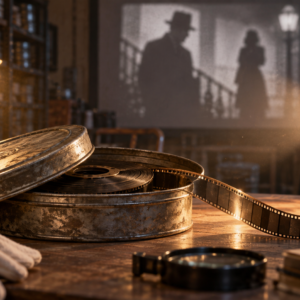
Recovered film is not automatically a finished documentary. The rolls need to be preserved, examined, scanned, organized and edited into a form an audience can follow. The project is part of a 15-year effort to recover and return Brookner’s archive to viewers, led by his nephew Aaron Brookner and filmmaker Paula Vaccaro. The final 78-minute documentary is directed by Aaron Brookner and Rodrigo Areias.
That long timeline matters because the story is not simply “old footage found.” It is a creative act of recovery: determining what survived, bringing it into view, and deciding how the original images should speak together. The footage was filmed on 16mm, a physical format whose reels carry not just images but the marks and texture of the camera that recorded them.
The film premiered at the Locarno Film Festival in 2025, and it has continued to reach audiences through festivals and special screenings. Getty has scheduled another screening for October 23, 2026. That upcoming event is useful context, but the stronger story is the archive behind the film: decades-old footage that makes an influential gathering visible again.
This is cultural history you can actually see
The Nova Convention connected people who often appear in separate histories: Beat writing, punk and experimental music, performance art, film and downtown New York. Burroughs may be the event’s central figure, but the recovered footage shows how many other creative worlds were in the room. The result is less like a lecture about a movement and more like opening a door into one of its meetings.
For fans who know these names through albums, books and later films, the archive gives them a chance to encounter the people before they became fixed cultural icons. Patti Smith and Frank Zappa are not just names in a retrospective. They are part of an event captured while it was happening, surrounded by artists and audiences whose contributions may be less familiar now.
That does not mean every moment on the reels is newly discovered or that every famous attendee appears in a never-before-seen performance. The filmmakers and official event materials describe the work as drawing on recovered and previously unseen footage; individual appearances and scenes should be attributed to the film’s documentation rather than inflated beyond it.
A lost archive gets a public life
The most compelling part of NOVA ’78 is the distance it closes. Brookner filmed these artists in 1978. The reels then spent decades outside public view. Now the recovered images can be watched as a record of people making art together, not just discussed as a story about what once happened.
Forty-four rolls are a lot to bring back from obscurity. They are also a reminder that cultural history can remain hidden in the format that first captured it: cans, reels, and footage waiting for someone to recognize what it might contain.
Sources: Getty’s film and event information; Institute of Contemporary Arts’ screening and trailer page; British Council UK Films Database.